From a Digital Line to Echoes in the Physical World
For Nick Ervinck, everything begins with a simple line in his digital universe. He sets this line in motion and follows its development. It grows, twists, branches out and transforms. Step by step, a new structure unfolds. On the screen, a dynamic interplay of lines emerges, expanding organically, almost as if the form is guided by its own internal logic.
At this stage, the work exists solely as digital code: weightless, scalable and independent of any material. For Ervinck, this moment is essential. It is not merely the digital origin that matters, but rather the point at which a virtual form transitions into the physical world and begins to engage with materiality, gravity and scale.
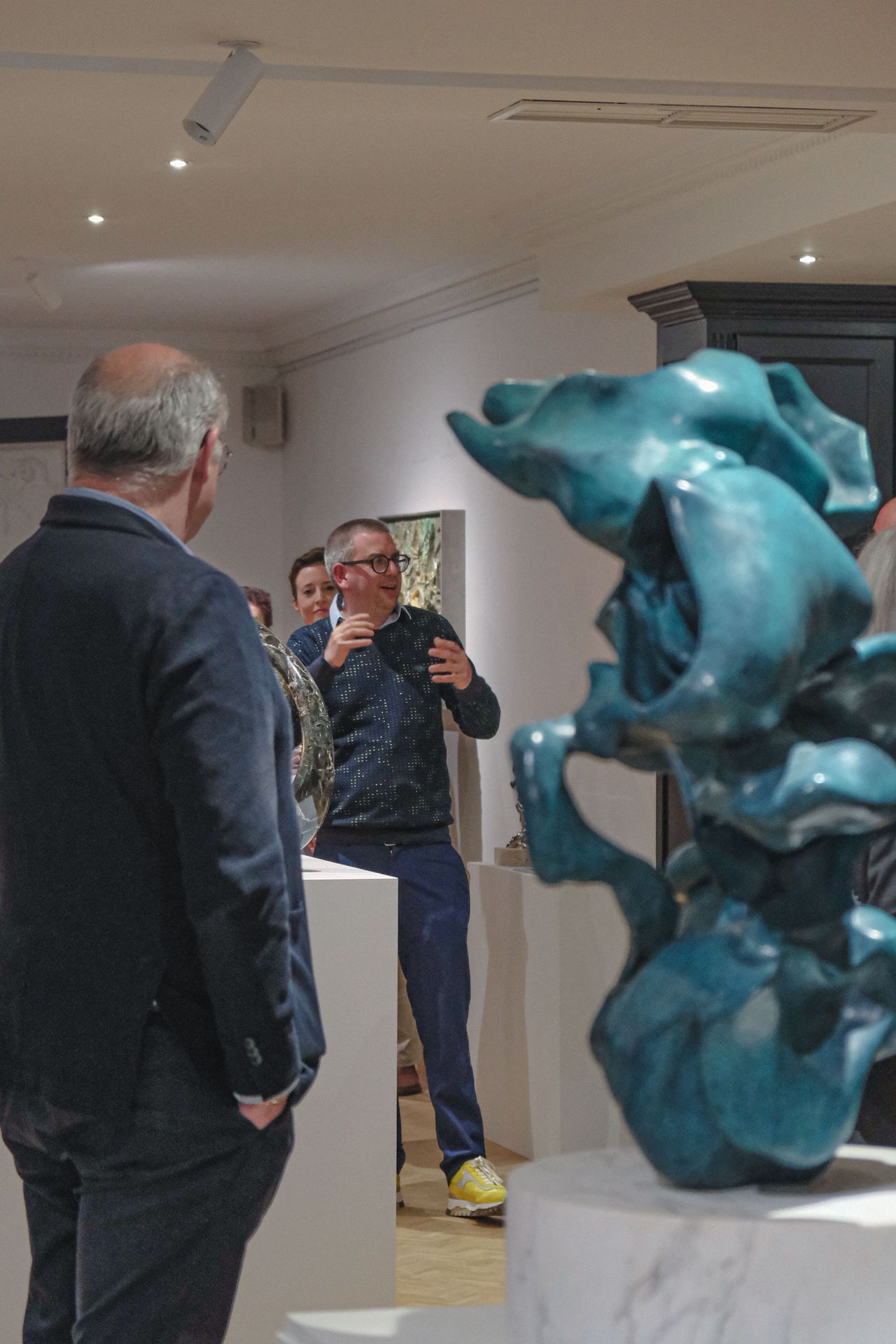
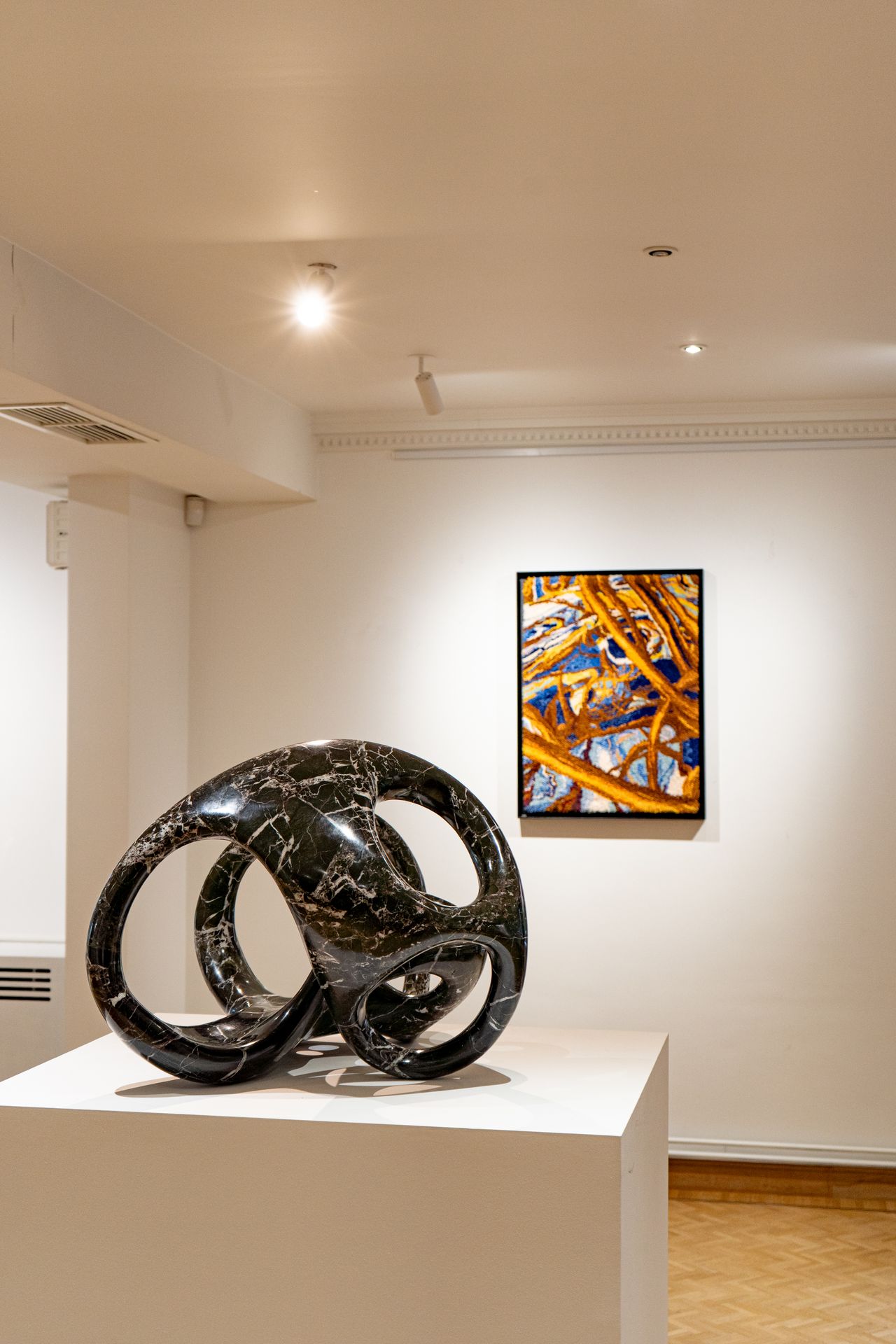
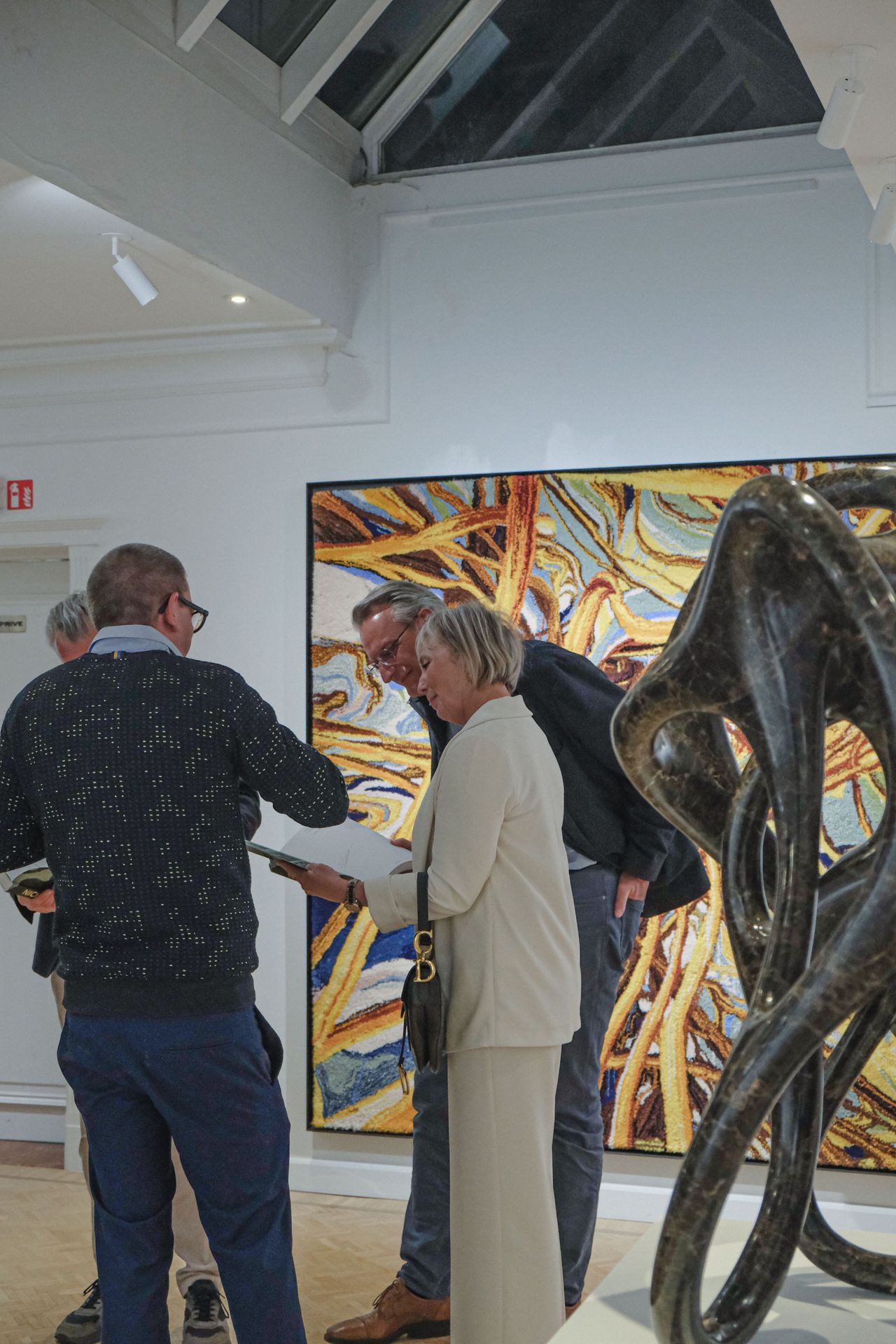
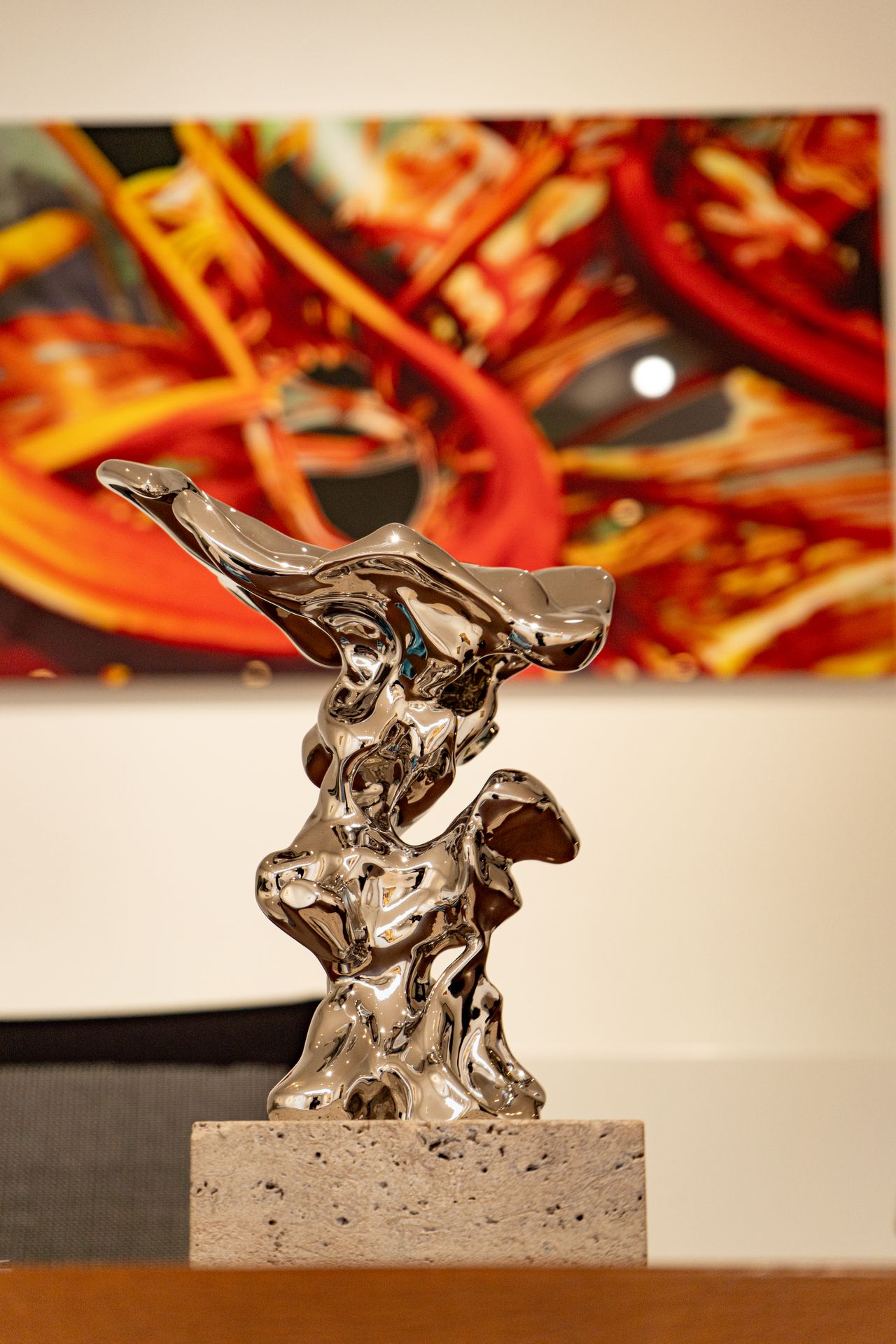
As the title Echoes in Fabric, Marble and Metal suggests, the same digital origin reappears through different materials. Not as an exact replica, but as an echo that resonates differently each time. In marble, the form acquires weight and density. In metal, it responds to light and its surroundings. In textile, it becomes softer and more tactile. Each material compels the form to adopt a new character and adds its own layer of meaning.
Every translation originates from the same digital movement, yet results in a distinct physical presence. What begins in the digital realm reverberates differently in fabric, marble and metal.
This way of working marks a new chapter within Ervinck's practice. While he is internationally renowned for his distinctive, brightly coloured 3D-printed and polyester sculptures, he consciously chooses here to enter into a dialogue with traditional and artisanal materials. The digital remains the point of departure, but gains new depth through its encounter with material, craftsmanship and time.
The Encounter Between Technology and Craftsmanship
What characterises Nick Ervinck's work is the effortless way in which he brings together two worlds often regarded as opposites. The digital and the artisanal, the immaterial and the tangible, the future and the past seamlessly converge in his practice. Forms are conceived in a virtual space, yet subsequently carved, shaped or woven into materials that carry a rich material history.
This transition becomes visible in his sculptures, drawings and tapestries, which together feel like a concentrated explosion of energy and movement. Lines seem to flow, while forms appear to stretch, contract and evolve, as though they could continue growing at any moment. Just as the digital line develops organically, these forms acquire a fluid, almost liquid presence.
Within Ervinck's universe, forms remain open and rounded, free from the sharp edges traditionally associated with marble sculpture. Voids and openings play a role that is just as important as the mass itself. They allow light to circulate, reinforce the sense of movement and determine how the work engages with its surrounding space.
Nick Ervinck spent two years preparing this solo exhibition.
The result is a cohesive body of work in which his digital universe is translated into a rich palette of materials, and where form is not fixed, but continuously renegotiated between code and matter.